
Product Management Intern · June 2026 – August 2026
GlobalLogic
New York, NY
Led product on an eight-week residency pod that helped a client’s developer portal work with AI agents.
The problem
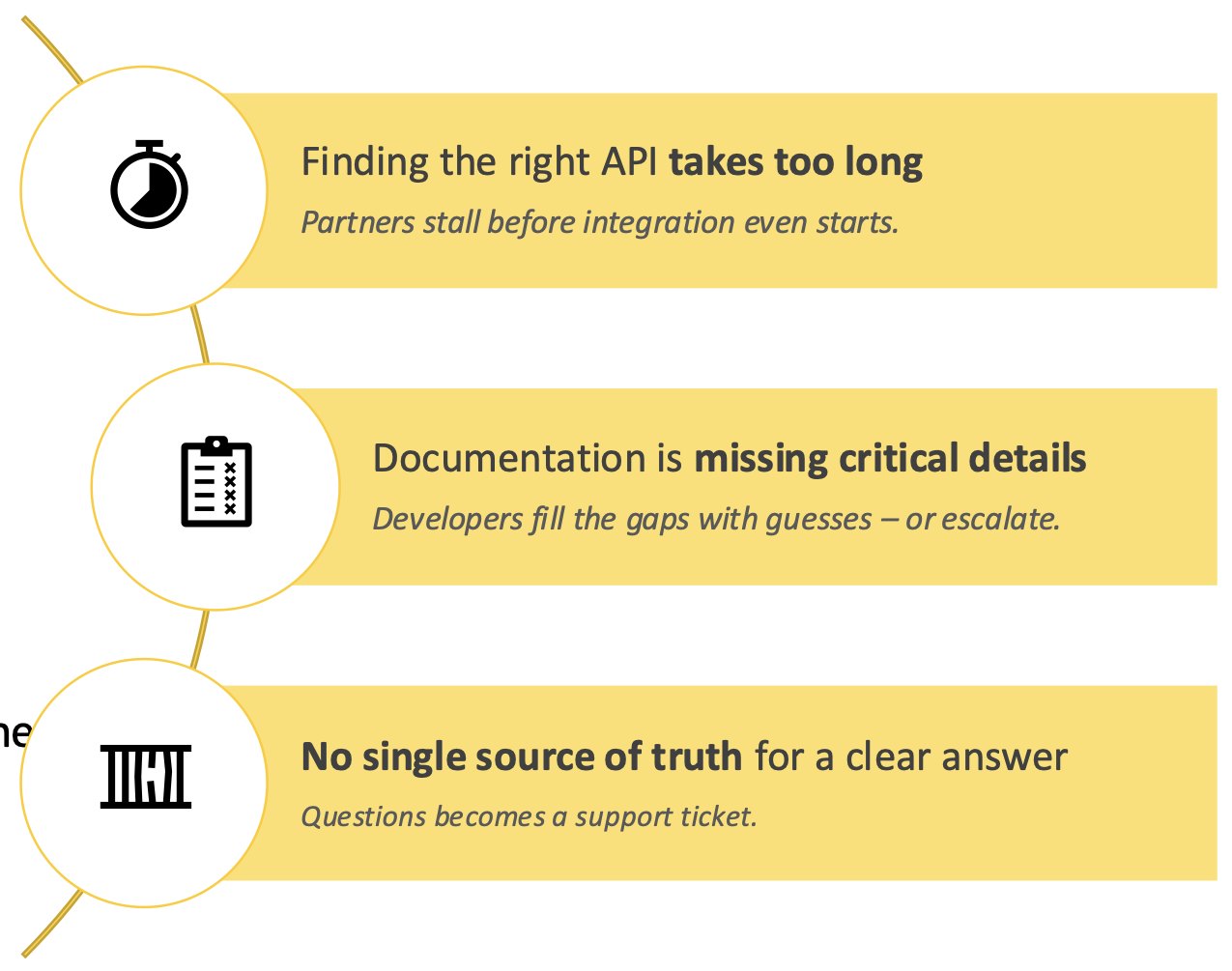
A Fortune 500 consumer financial services company came to us wanting to enable agentic commerce on its developer portal, but neither the client nor Method had scoped what that meant yet. We started by interviewing business stakeholders at the client, including its VP of technology product management, along with engineers and business people from our own company who worked on the client’s account, including a developer, a frontend lead and an integration manager. All of them described the same pattern.
Finding the right API could take two weeks. “Two weeks just to find the right API, and that was before writing a single line of code.” The documentation was missing the details AI coding tools needed, so the tools filled the gaps with guesses. And basic questions turned into 30 to 60 minute triage calls, repeated across partners every week.
We focused on two users: developers integrating the APIs, and business stakeholders trying to match a need to the right product without pulling in a developer.
One engine, two tools
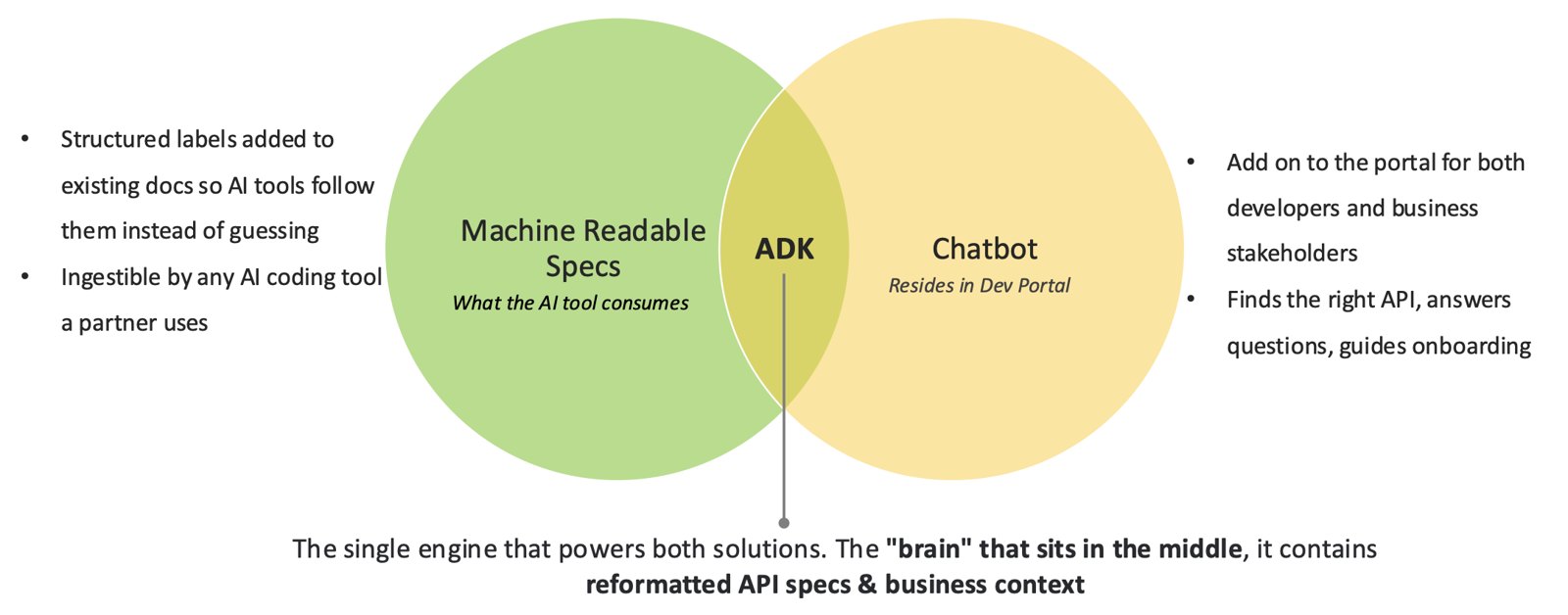
Rather than build two separate things, we designed an Agent Development Kit: a single source of truth holding reformatted API specs and the business context around them.
It powered both proofs of concept. The machine-readable specs were what an AI coding tool read, and the chatbot in the portal was what people talked to.
Specs an AI can follow
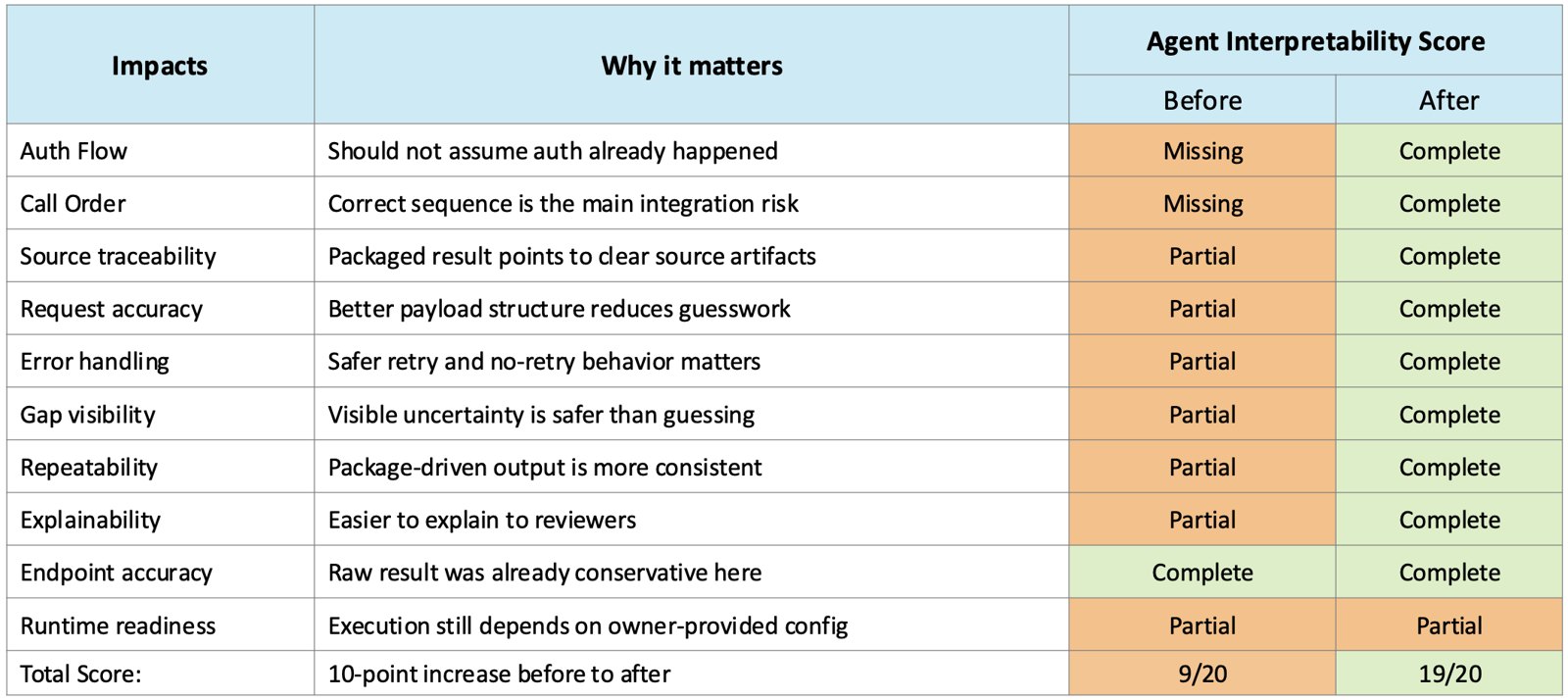
We took the existing API documentation and added structure: which package each API belonged to, which step it was and what had to come before it, what every error meant and whether to retry, and a worked example of exactly what to send and receive.
Then we ran the same prompt through GitHub Copilot against the original specs and against our bundles. On our 20-point interpretability scorecard, the AI went from 9 to 19. It got the call order and auth flow right instead of guessing. We built 2 of the 8 solution packages end to end to prove the pattern, taking spec coverage from 20% to 100%, all inside the client’s approved, siloed toolchain.
A chatbot that asks before it answers
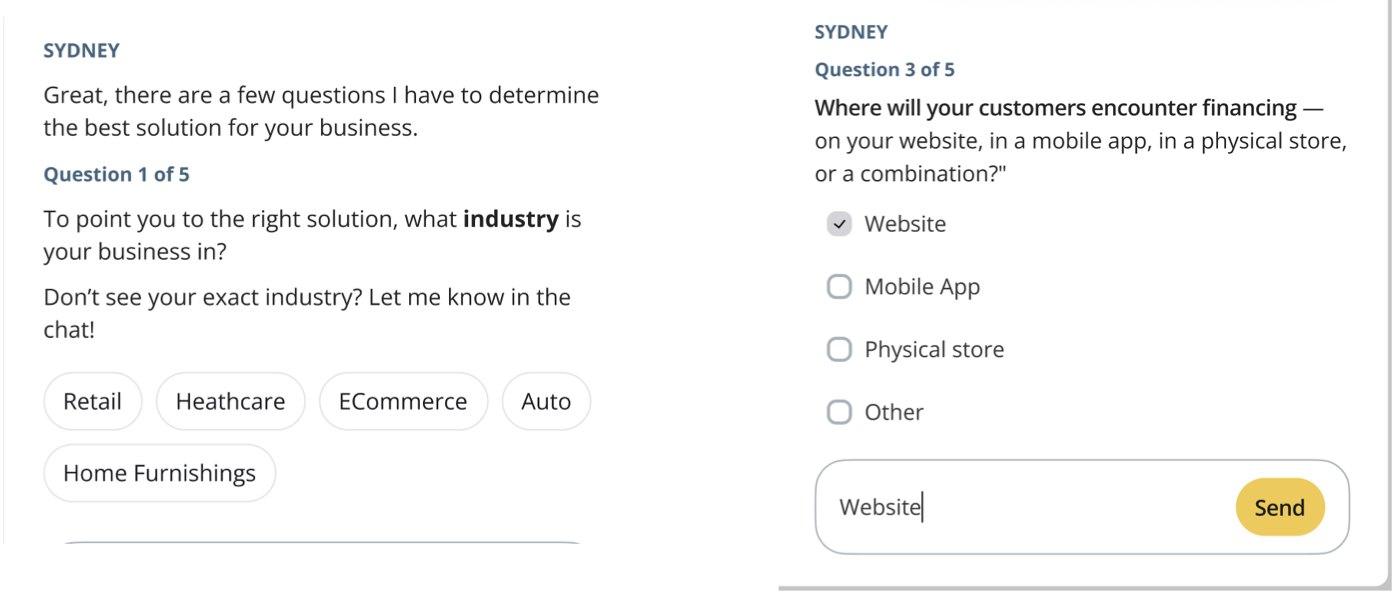
Instead of a blank chat box, the assistant opened with five short intake questions about industry, services, channel, user experience and partner type.
From those answers it recommended the right solution package, explained what it did, answered follow-up questions and handed developers starter prompts to begin the integration. Every answer was grounded in the kit, not the model’s guesses. In testing, it cut combined research and onboarding time by about 90%.
Leading the pod and the client
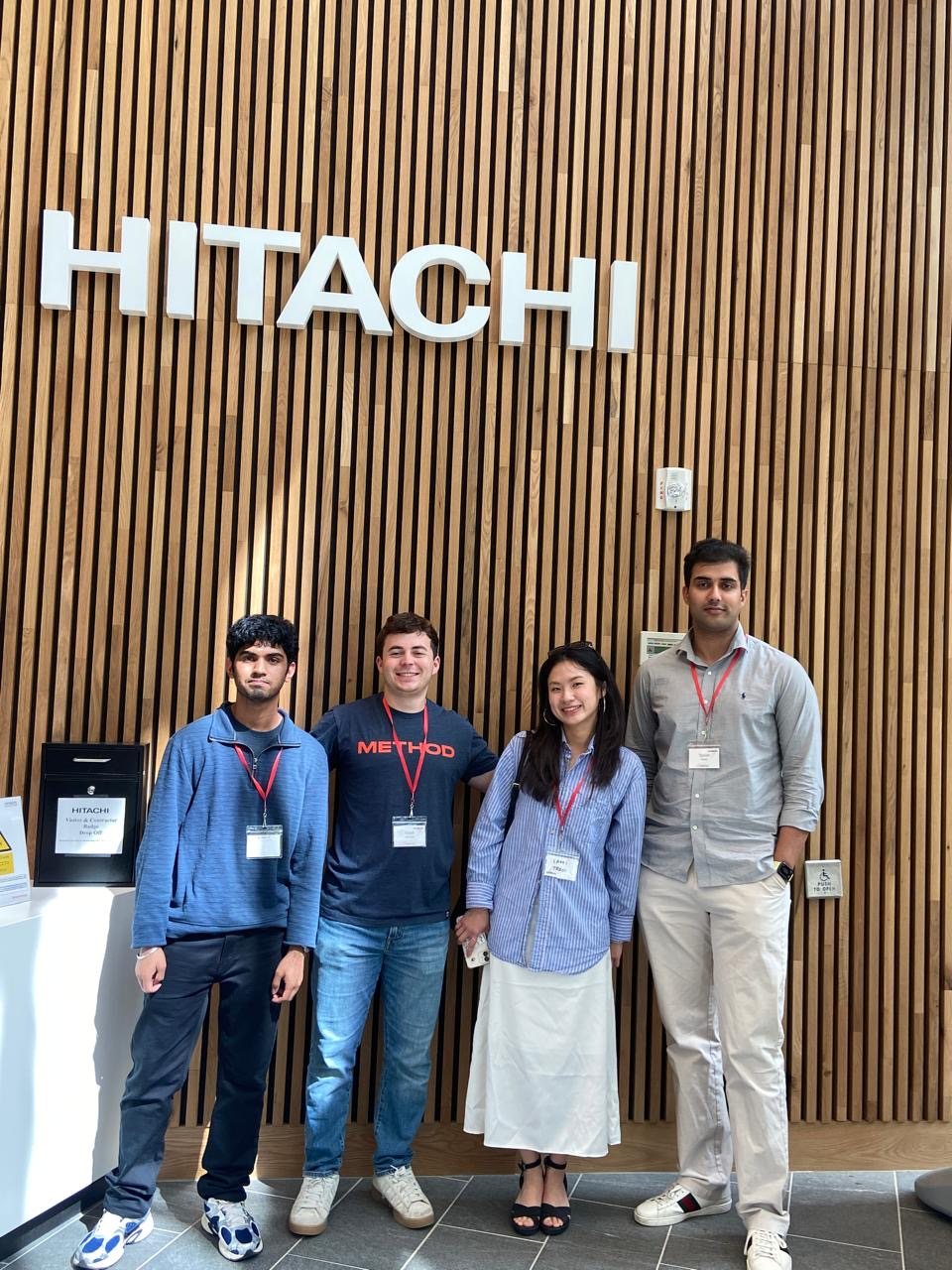
I was the product lead on a pod with a designer and two engineers: defining requirements, prioritizing what to build and coordinating the work.
I also owned the client relationship through weekly syncs, written updates and two major pitch-out demos, presenting weekly to VP-level stakeholders and translating technical work into business value. We worked around shifting scope and a sandbox-only environment without live API credentials, so we validated everything against the documented behavior.
The impact it could have
For partners, finding an API would go from weeks of digging to instant, guided recommendations, with a portal that answered in plain language. For developers, incomplete specs would become standardized, machine-readable ones their AI tools could build from.
For the company, repeated 30 to 60 minute triage calls would give way to self-service answers, freeing support and development teams for higher-value work, and an agent-ready developer portal would become part of its competitive edge. We proposed measuring it through discovery time per API, time to a partner’s first successful API call, triage calls per week and the share of chatbot answers resolved without escalation.
Handing it off
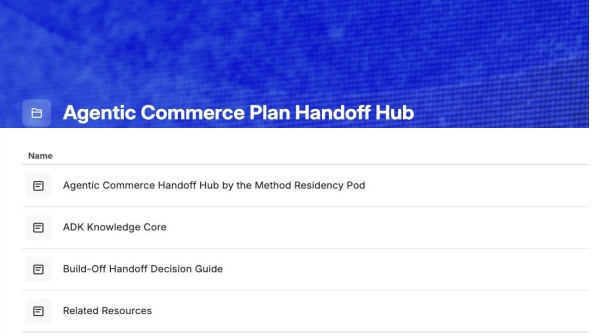
We left the client’s team with a handoff hub covering the kit, the spec approach, the chatbot architecture, a readiness analysis across ten solutions and a 90-day roadmap.
The client approved the work for full development and a production release, starting with live API credentials to validate the bundles against real responses. Method went on to use the proof of concept as a reusable sales asset.
About GlobalLogic
GlobalLogic, a Hitachi Group company, is a global digital engineering company specializing in software development, product design and digital transformation. I worked within Method, its design and strategy studio, as part of its residency program.